Choosing the right height for your standing desk is crucial for comfort and productivity. Many people struggle with this decision. They often wonder, "How to choose the right height for a standing desk?" It’s important to consider your individual height, as well as your workspace. An ideal desk height allows your elbows to rest at a 90-degree angle.
To find the correct height, you may need to experiment. Your feet should be flat on the floor. If they aren’t, adjusting your desk or chair might be necessary. Some users overlook the importance of monitor placement. The top of the screen should be at eye level. This prevents neck strain and promotes better posture.
It’s easy to get it wrong. Many make assumptions based on their friends' setups, which can lead to discomfort. Each body is unique. Factors like shoe height and desk accessories also play a role. Reflecting on your daily habits can reveal adjustments that improve your work experience significantly.
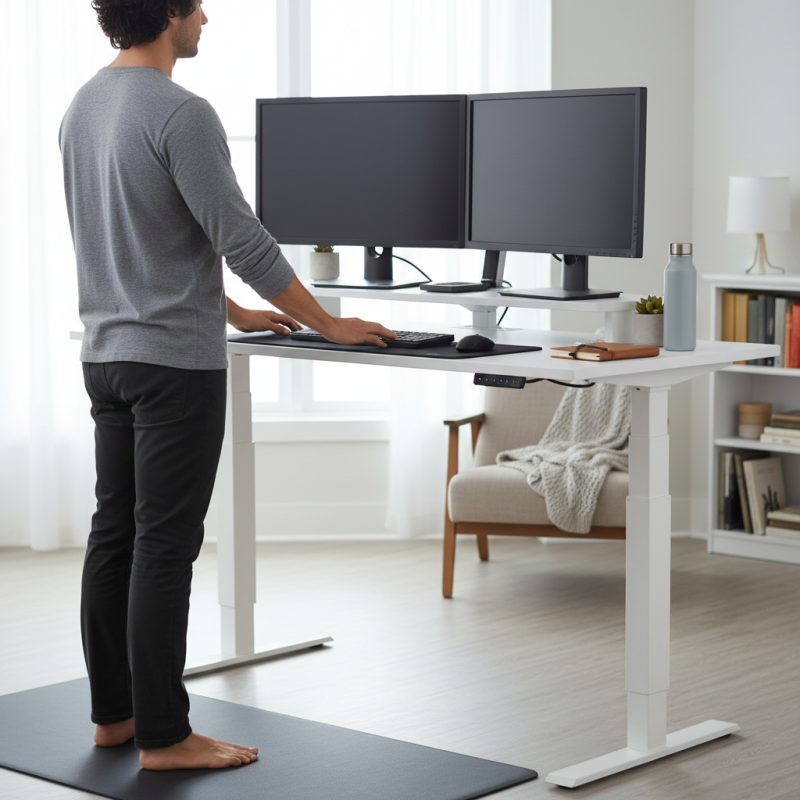
Choosing the right height for a standing desk is crucial for ergonomic health. Research shows that an improper desk height can lead to discomfort and long-term issues. The optimal height for many falls between 24 to 36 inches. However, individual needs vary widely based on body size and type.
Studies indicate that about 70% of users report pain when their desk height is not adjusted properly. Arm position matters. Your elbows should sit at a 90-degree angle. Wrist alignment is key to preventing strain. Some experts suggest using adjustable desks to cater to changes in posture throughout the day.
Furthermore, many workers struggle with maintaining a stable stance while standing. Poor posture can negate the benefits of a standing desk. A study from the American Journal of Public Health found that only 27% of users maintained ideal standing postures. This leaves a huge gap for improvement. Reflecting on personal experience may reveal deeper insights into what desk height feels right for you.
Measuring your height is crucial for finding the right desk height. Your standing desk should align with your elbows. When you stand, your arms should hang loosely by your sides. This ensures comfort and promotes good posture. Many people ignore this detail and end up with discomfort later.
To measure correctly, stand barefoot on a flat surface. Take note of your shoulder height. This measurement helps in adjusting the desk. Ideally, the desk surface should be just below your elbows. If your desk is too high or too low, it can lead to strain. Some might find themselves slouching or reaching awkwardly.
Experimenting with adjustments can be valuable. Make changes and notice how your body feels. Pay attention to any tension or fatigue. You may need to rethink your setup multiple times. Finding that perfect fit takes patience. It’s about creating a workspace that supports you, as everyone’s body is different.
When selecting the right height for your standing desk, posture is crucial. A proper desk height ensures your arms and wrists stay at comfortable angles. Your elbows should bend at about 90 degrees when typing. This alignment can prevent strain over long periods. If your desk is too high, your shoulders might hunch. Too low and you may have to reach excessively.
It's important to consider your body's dimensions. Everyone is built differently. What works for one person might not work for another. An improperly set desk can lead to discomfort and potentially long-term issues. Make adjustments as necessary. Your wrists should float comfortably above the keyboard. Avoid resting them on the desk. Small changes can make a significant difference. Experiment with your desk height until you find the perfect fit. Reflection on your comfort level can guide adjustments over time.
Choosing the right height for your standing desk is essential for maximizing health benefits. Recent research from the American Journal of Epidemiology indicates that increasing standing time can reduce the risk of chronic diseases. However, the optimal standing time can vary. Experts suggest starting with shorter intervals and gradually increasing them. Aim for about 30 minutes of standing every hour to begin.
Another critical finding comes from the Occupational Safety and Health Administration (OSHA), which advises alternating between sitting and standing. This can help prevent fatigue and discomfort. Don’t hesitate to adjust your desk height as needed. A desk that’s too high or too low can lead to strain.
When selecting desk height, consider your body dimensions. Elbows should remain at a 90-degree angle. This promotes better posture. Standing desks can be a game-changer. Yet, remember, standing too long can lead to fatigue.
It’s essential to stay aware of your body’s signals. If you're feeling tired or stressed, it may be time to sit down. Incorporating movement throughout your day can enhance your standing time experience. Balance is key for long-term health benefits.
When choosing a standing desk, you must consider its adjustability options. There are two main types: electric and manual. Electric desks offer smooth adjustments with the push of a button. They suit users who frequently switch between sitting and standing. Manual desks are often more affordable. However, adjusting them can be less convenient. Evaluate your daily habits.
Tips for selecting the right height include measuring your elbow height while standing. Your arms should align with the desk surface for comfort. Don’t forget about your screen height. It should be at or just below eye level. A poor setup can lead to discomfort.
Look for features that fit your needs. If you work in a collaborative environment, electric desks can enhance productivity. On the other hand, manual options might work for budget-conscious users. Reflect on your workspace. Finding the right desk can make a significant difference in your comfort and health.
: Start with short intervals of standing. Aim for about 30 minutes of standing every hour.
Alternating can help prevent fatigue and discomfort during work.
Measure your elbow height while standing. Keep your elbows at a 90-degree angle.
A desk that's too high or too low can lead to strain and discomfort.
Incorporate movement throughout the day. Listen to your body’s signals.
Electric desks allow smooth adjustments. They are convenient for frequent position changes.
Yes, manual desks are often more budget-friendly but less convenient to adjust.
Your screen should be at or just below eye level to avoid discomfort.
A proper desk can significantly improve your comfort and overall health.
Yes, standing too long can lead to fatigue and may require you to sit down.
When considering how to choose the right height for a standing desk, it’s essential to understand ergonomic principles. The ideal desk height should be determined by measuring your personal height to ensure optimal adjustments. Proper posture is crucial, and aligning your arms and wrists at ideal angles can significantly enhance comfort during use.
Additionally, research indicates that varying your standing time can offer health benefits, promoting better circulation and reducing fatigue. When evaluating desk features, consider whether you prefer electric or manual adjustability options, as this can greatly impact convenience and ease of use. By following these guidelines, you can create a more effective and comfortable workspace tailored to your needs.

Lullaby Furniture